50

min
  • lunch

Token-Crisp Chicken Katsu Sando

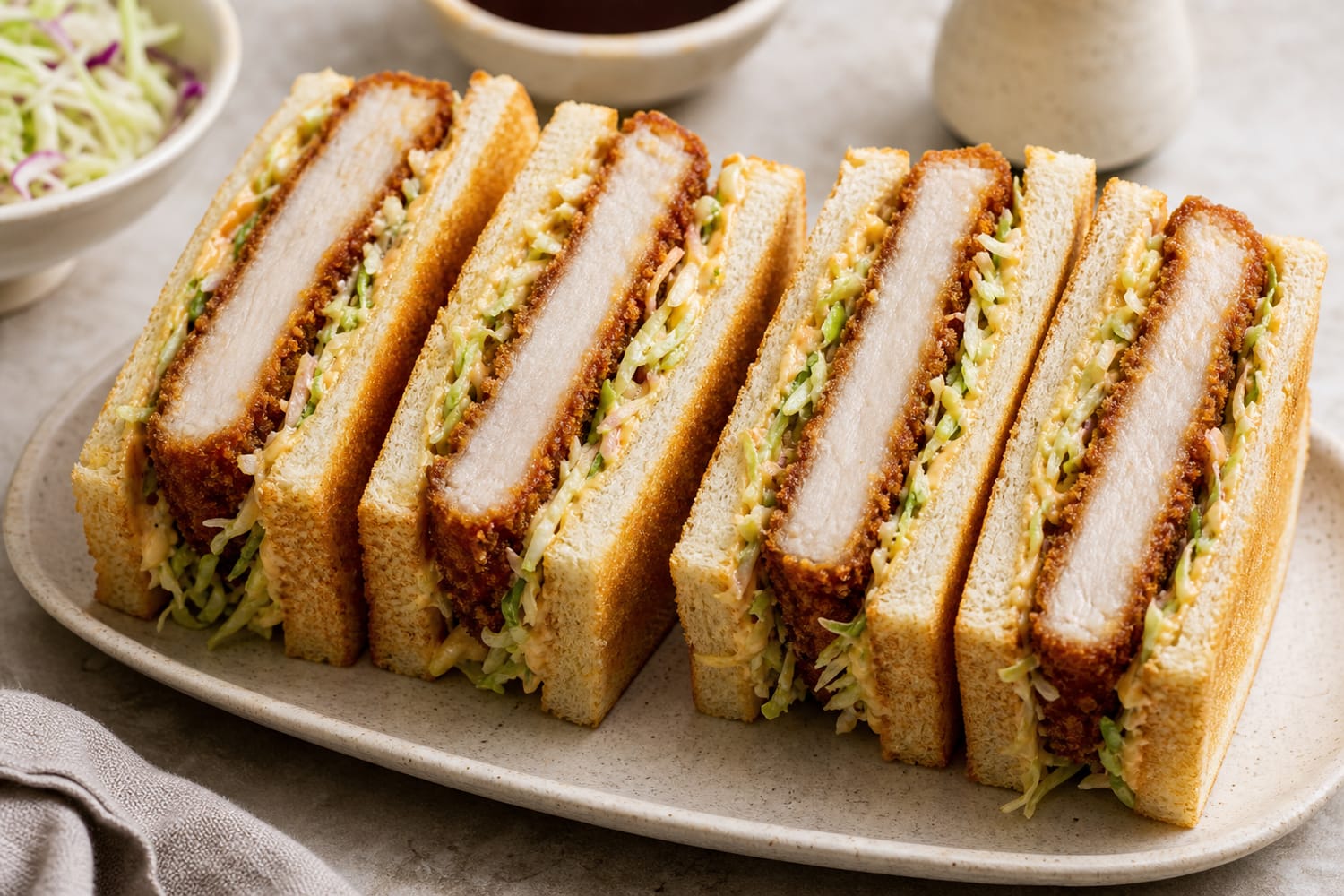
Crisp, juicy, tangy, and deeply savory, this chicken katsu sando layers rice-cracker panko chicken with miso-tonkatsu glaze, wasabi mayonnaise, and apple-cabbage slaw. Soft Japanese milk bread keeps the sandwich tender while toasted sesame seeds and crushed rice crackers give every bite an Iron Chef-worthy crunch.

  • SERVES
    4 people
  • PREP TIME
    30 minutes
  • Cook TIME
    20 minutes
Ingredients

For the Apple-Cabbage Slaw

  • 2 cups finely shredded green cabbage
  • 1 small crisp apple, cut into thin matchsticks
  • 2 tablespoons rice vinegar
  • 1 teaspoon granulated sugar
  • 1/2 teaspoon toasted sesame oil
  • 1/4 teaspoon kosher salt

For the Miso-Tonkatsu Glaze

  • 1/3 cup tonkatsu sauce
  • 1 tablespoon white miso
  • 2 teaspoons honey
  • 1 teaspoon soy sauce
  • 1 teaspoon rice vinegar
  • 1/2 teaspoon grated fresh ginger

For the Wasabi Mayonnaise

  • 1/3 cup Japanese mayonnaise
  • 1 teaspoon wasabi paste, or more to taste
  • 1 teaspoon fresh lemon juice

For the Chicken Katsu

  • 4 small boneless, skinless chicken thighs, about 1 1/2 pounds total
  • 1 teaspoon kosher salt
  • 1/2 teaspoon freshly ground black pepper
  • 1/2 cup all-purpose flour
  • 2 large eggs
  • 1 tablespoon water
  • 1 1/2 cups panko breadcrumbs
  • 1 cup plain rice crackers, finely crushed
  • 2 tablespoons toasted sesame seeds
  • Neutral frying oil, such as canola or grapeseed oil

For Assembly

  • 8 thick slices shokupan or other soft white sandwich bread
  • 2 tablespoons unsalted butter, softened
  • 2 scallions, thinly sliced
  • 1/4 cup fresh cilantro leaves, optional
Directions
  1. Prepare the slaw: Combine the cabbage and apple in a bowl. Whisk together the rice vinegar, sugar, sesame oil, and salt, then toss with the slaw. Refrigerate while preparing the remaining components.

  2. Make the glaze: Whisk the tonkatsu sauce, miso, honey, soy sauce, rice vinegar, and ginger together in a small saucepan. Simmer over low heat for 2 to 3 minutes, stirring until glossy and smooth. Remove from the heat.

  3. Mix the mayonnaise: Stir together the Japanese mayonnaise, wasabi paste, and lemon juice. Taste and add more wasabi if desired.

  4. Shape the chicken: Place each chicken thigh between two sheets of parchment paper and gently pound it to an even 1/2-inch thickness. Season both sides with salt and black pepper.

  5. Set up the coating station: Place the flour in a shallow bowl. In a second bowl, whisk the eggs with the water. In a third bowl, combine the panko, crushed rice crackers, and sesame seeds.

  6. Bread the chicken: Coat each thigh in flour and shake off the excess. Dip it into the egg mixture, then press it firmly into the panko mixture so the surface is thoroughly covered.

  7. Heat the oil: Pour 1/2 inch of oil into a heavy skillet and heat it to 350°F. Line a wire rack or baking sheet with paper towels.

  8. Fry the katsu: Fry the chicken in batches for 2 to 3 minutes per side, adjusting the heat as needed to maintain the oil temperature. The crust should be deeply golden, and the thickest part of each thigh should reach the USDA-recommended poultry temperature of 165°F. Transfer to the prepared rack and rest for 3 minutes.

  9. Glaze the chicken: Brush both sides of the warm katsu lightly with the miso-tonkatsu glaze. Avoid saturating the crust; a thin, shiny coating provides plenty of flavor while preserving its crunch.

  10. Prepare the bread: Lightly butter one side of each bread slice. Spread the wasabi mayonnaise over the butter, reaching all the way to the edges.

  11. Assemble the sandos: Divide the drained apple-cabbage slaw among four bread slices. Top each with chicken katsu, scallions, cilantro if using, and a second slice of bread.

  12. Finish and serve: Press each sandwich gently with a cutting board for 30 seconds. Trim the crusts for a classic presentation, if desired, then slice each sando in half with a sharp serrated knife. Serve immediately with additional glaze on the side.

Katsu sando is Japanese comfort food built around a beautifully simple contrast: a crisp breaded cutlet tucked between slices of exceptionally soft white bread. Pork tonkatsu is the customary centerpiece, although chicken, shrimp, and other variations are also popular. The sandwich belongs to Japan’s broader tradition of adapting Western-style bread and cutlets into distinctly Japanese dishes; this traditional katsu sando overview offers another approachable look at the classic combination.

The Token-Crisp version keeps that satisfying structure but approaches every layer as an opportunity to optimize texture. Boneless chicken thighs remain juicier and more forgiving than thin chicken breasts. Mixing crushed rice crackers into the panko creates an especially rugged coating, while toasted sesame seeds contribute a subtle nuttiness. Maintaining the frying oil near 350°F helps the crust brown quickly without becoming heavy or greasy.

The inspiration was to treat the sandwich like a perfectly balanced flavor algorithm: soft bread, juicy chicken, brittle crunch, savory glaze, cooling slaw, and a controlled spark of wasabi in every bite.

Instead of applying plain tonkatsu sauce, this recipe enriches it with white miso, ginger, and honey. The resulting glaze is salty, fruity, earthy, and lightly sweet, but it is brushed on sparingly so the chicken stays crisp. Wasabi mayonnaise adds richness and clean heat, while the apple-cabbage slaw cuts through the fried coating with acidity and fresh crunch. Draining the slaw before assembly is important because excess dressing can quickly soften the bread.

Shokupan is ideal because its fine crumb compresses neatly around the filling without competing with it. A soft bakery-style white loaf is an excellent substitute. For tidy slices, allow the chicken to rest briefly, press the assembled sandwiches gently, and cut them with a serrated knife rather than a chef’s knife.

Serve the sandos immediately, either as a standalone lunch or alongside pickles, edamame, or components inspired by the site’s Binary Bento Box. The sandwich is most impressive when the chicken is still hot, the slaw is cold, and the token-like shards of rice cracker are audibly crisp.