
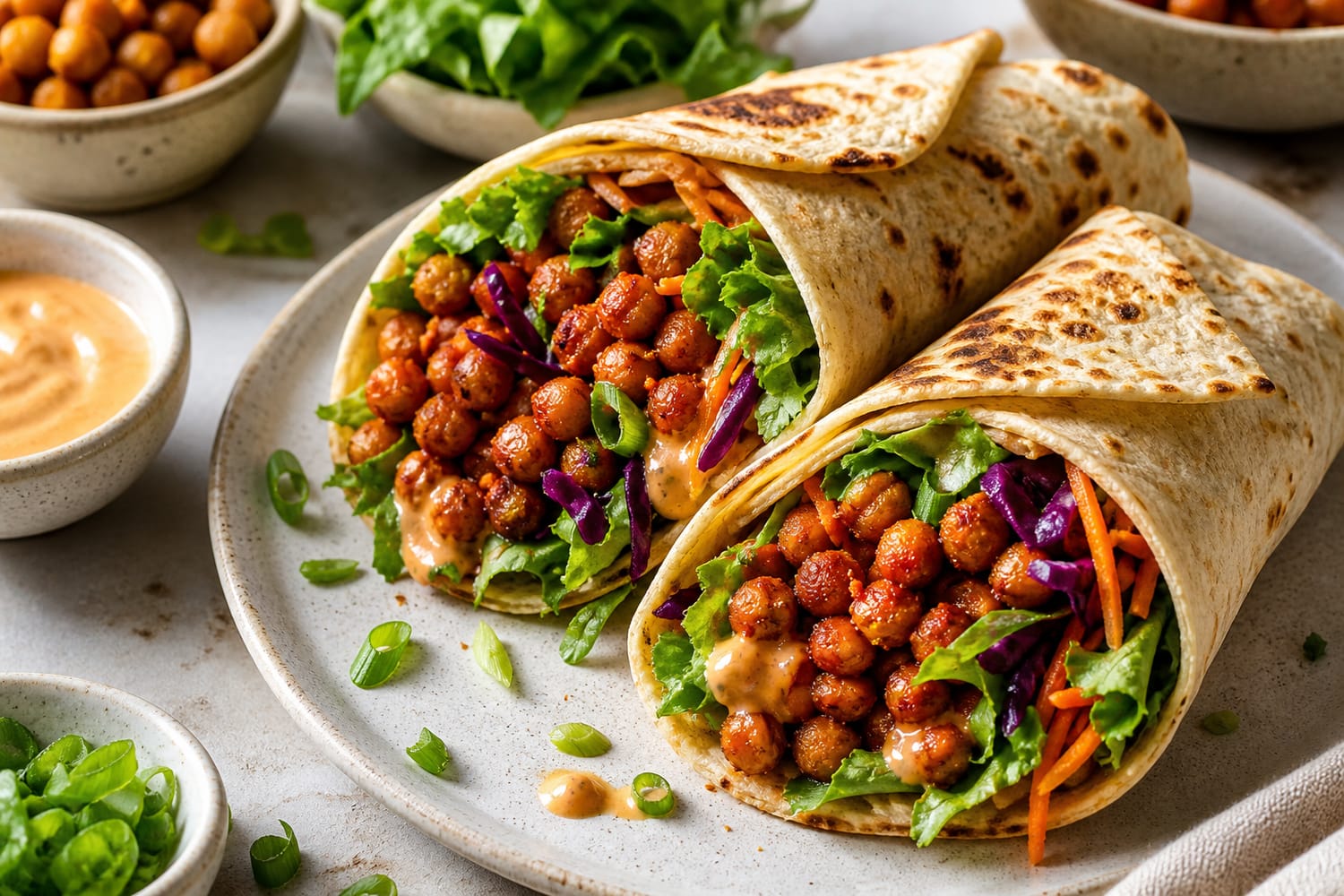
Gochujang is a traditional Korean fermented condiment typically made with red pepper, soybeans, grain, and salt. Its savory heat, subtle sweetness, and fermented depth make it particularly effective in glazes. Historical Korean culinary records describe preparations resembling modern gochujang, demonstrating the condiment’s longstanding place in Korean food culture. For more background, explore this overview of gochujang’s origins and evolution.
This recipe places that complex flavor inside a familiar handheld format. Chickpeas provide a creamy interior beneath their crisp coating, as well as plant protein and fiber. The key technique is to roast them before adding the glaze. Coating chickpeas in gochujang at the beginning would introduce moisture and sugar too early, making them more likely to soften or scorch. Harvard’s guide to cooking and serving chickpeas offers additional preparation ideas for this versatile legume.
The central “prompt” behind the dish was simple: create a wrap in which every component answers another—heat with coolness, sweetness with acidity, and creamy textures with a decisive crunch.
Asian pear is the Iron Chef-style twist. Its floral sweetness reinforces the caramelized glaze, while its crisp, juicy texture keeps the slaw lively. Tangy sesame yogurt acts as a cooling counterpoint rather than a heavy dressing, and avocado gives the wrap enough richness to feel substantial.
Unlike many chickpea wraps, which feature soft chickpeas or hummus, this version makes texture the priority. It shares the portable appeal of the AI-Mapped Moroccan Chickpea Wrap, but shifts toward Korean-inspired sweet, spicy, and fermented flavors. Readers interested in another Korean-style wrap can also explore the AI-Augmented Bulgogi Beef Wrap.
For meal preparation, refrigerate the chickpeas, slaw, and sauce in separate containers. Re-crisp the chickpeas in a 400°F oven or air fryer before assembly, and drain any accumulated liquid from the slaw. Gochujang varies in heat and sweetness by brand, so taste the glaze and adjust the maple syrup or vinegar before coating the chickpeas.