
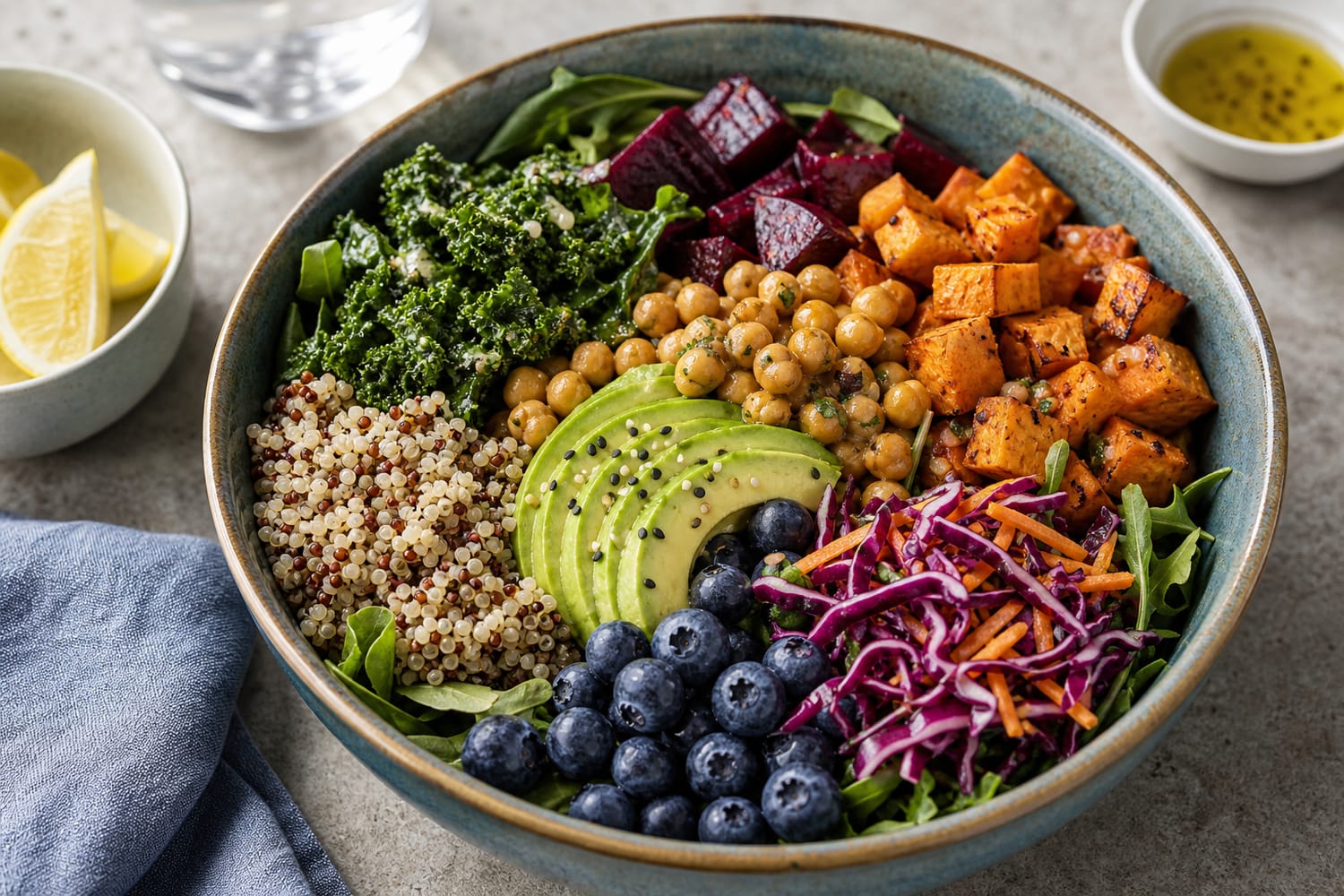
This bowl draws inspiration from the eating patterns often associated with Blue Zones, regions known for long-lived communities and diets rich in beans, vegetables, whole grains, herbs, and healthy fats. Rather than recreating one traditional dish from a single place, it borrows the spirit of those kitchens: simple ingredients, high flavor, and food that feels abundant without relying on excess meat, butter, or heavy sauces.
The “Bayesian” idea comes from building a bowl that improves as you update it. Start with a dependable base—whole grains, legumes, greens, and roasted vegetables—then adjust the final flavor based on what the ingredients need: more acid, more richness, more crunch, more heat. The charred lemon-miso dressing is the key twist. It adds the brightness of Mediterranean cooking, the umami of Japanese miso, and the creamy nuttiness of tahini in one spoonable sauce.
The inspiration behind this recipe is the idea that a great bowl is a delicious calculation: each ingredient adds evidence, and the final dressing updates everything into balance.
Common grain bowls can sometimes feel like separate components placed politely next to each other. This one is designed to taste integrated. Massaging the greens makes them tender enough to mingle with the warm grains. Roasting the chickpeas with the sweet potatoes gives both sweetness and crunch. White beans add creaminess, while toasted walnuts echo the dressing and create a satisfying finish.
It is also practical. The grains, roasted vegetables, and dressing can be made ahead, then assembled throughout the week. Serve it warm for dinner, room temperature for lunch, or with a poached egg for a more substantial brunch. The result is wholesome but not bland, elegant but not complicated, and just unusual enough to feel worthy of an Iron Chef AI kitchen.