40

min
  • dinners

Honey Garlic Chicken

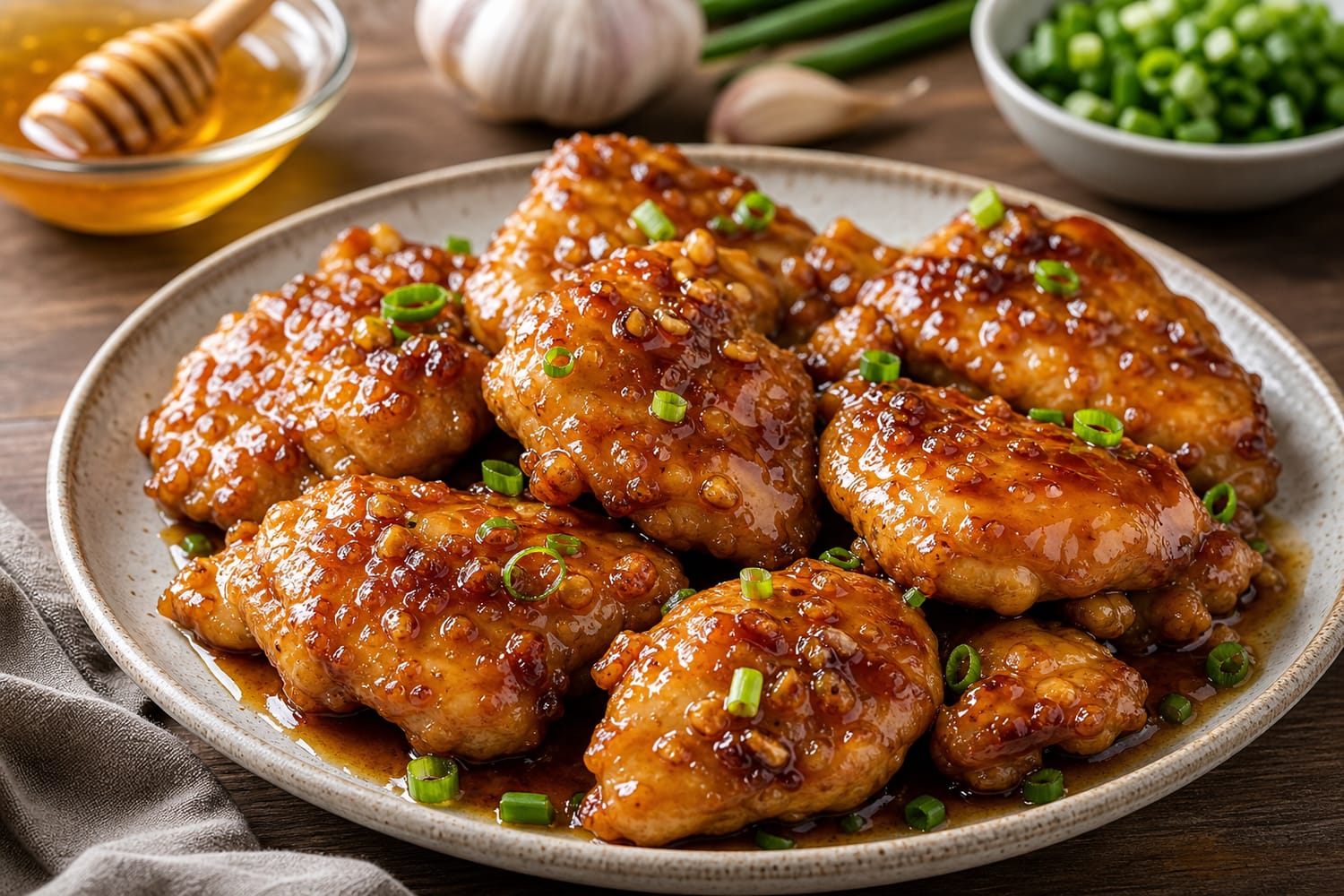
This skillet honey garlic chicken balances crisp-edged, juicy thighs with a glossy sweet-savory sauce. Black garlic, gochujang, orange zest, and rice vinegar give the familiar recipe an Iron Chef–inspired twist, adding fermented depth, gentle heat, and bright acidity without sacrificing its weeknight simplicity.

  • SERVES
    4 people
  • PREP TIME
    15 minutes
  • Cook TIME
    25 minutes
Ingredients
  • 1½ pounds boneless, skinless chicken thighs
  • ¾ teaspoon kosher salt
  • ½ teaspoon freshly ground black pepper
  • ½ teaspoon smoked paprika
  • 2 tablespoons cornstarch
  • 2 tablespoons neutral cooking oil, divided
  • 6 fresh garlic cloves, finely minced
  • 2 black garlic cloves, mashed into a paste
  • ⅓ cup honey
  • ¼ cup low-sodium soy sauce
  • 2 tablespoons rice vinegar
  • 1 tablespoon gochujang
  • 1 teaspoon toasted sesame oil
  • 1 teaspoon finely grated fresh ginger
  • 1 teaspoon orange zest
  • 2 tablespoons water
  • 2 scallions, thinly sliced
  • 1 teaspoon toasted sesame seeds
  • Steamed rice and sautéed greens, for serving
Directions
  1. Pat the chicken thighs dry with paper towels. Trim away excess fat, then season the chicken with salt, pepper, and smoked paprika. Sprinkle with the cornstarch and toss until lightly coated.

  2. Whisk together the fresh garlic, black garlic, honey, soy sauce, rice vinegar, gochujang, sesame oil, ginger, orange zest, and water in a medium bowl. Mash any remaining pieces of black garlic until the sauce is mostly smooth.

  3. Heat 1 tablespoon of neutral oil in a large skillet over medium-high heat. Arrange half of the chicken in a single layer and cook for 4 to 5 minutes per side, or until browned. Transfer to a plate and repeat with the remaining oil and chicken.

  4. Reduce the heat to medium-low. Pour the honey garlic sauce into the skillet and simmer for 2 minutes, stirring frequently and scraping up the flavorful browned bits from the bottom.

  5. Return the chicken and any accumulated juices to the skillet. Cook for 5 to 7 minutes, turning the pieces occasionally, until the sauce becomes thick and glossy and thoroughly coats the chicken.

  6. Check the thickest piece with a food thermometer. The chicken should reach a safe internal temperature of 165°F, as recommended in the USDA’s chicken safety guidance.

  7. Remove the skillet from the heat before the honey begins to caramelize too deeply. Garnish with scallions and toasted sesame seeds, then serve over steamed rice with sautéed greens.

Honey garlic chicken does not belong to one strictly defined culinary tradition. Instead, it reflects the broad appeal of combining honey’s floral sweetness with pungent garlic and salty, umami-rich seasonings. Many contemporary versions use chicken breast, bottled sauces, or a simple mixture of honey and soy sauce. This interpretation preserves that approachable character while introducing enough complexity to make the dish feel dinner-party worthy.

Boneless chicken thighs are especially effective here because they remain succulent during high-heat browning and stand up well to a concentrated glaze. A light cornstarch coating encourages caramelization and gives the sauce something to cling to. Cooking the chicken in batches is equally important: an overcrowded skillet traps steam, preventing the deeply browned edges that create the foundation of the pan sauce.

The idea behind this recipe was to treat a familiar weeknight favorite like a secret-ingredient challenge. Black garlic became the featured element, transforming a straightforward glaze into something darker, fruitier, and more intriguing.

Black garlic supplies mellow sweetness and fermented depth without the sharp bite of raw garlic. Fresh garlic is still included for aroma, while gochujang contributes moderate heat and another savory layer. Orange zest lifts the heavier flavors, and rice vinegar keeps the honey from becoming cloying. Together, these additions create a glaze that moves between sweet, tangy, smoky, and gently spicy.

The sauce should simmer rather than boil aggressively. Honey can scorch quickly, particularly after the glaze begins to reduce, so lowering the heat before adding it is essential. Remove the skillet from the burner as soon as the sauce coats the back of a spoon; it will continue thickening as it cools.

Serve the chicken over jasmine rice, brown rice, or coconut rice, with broccolini, bok choy, or snap peas alongside. For another bold skillet dinner centered on aromatic alliums, explore these Garlic Butter Chicken Thighs, which pair garlic with miso, lemon, and smoked paprika.