55

min
  • desserts

Generative S'mores Skillet Cookie

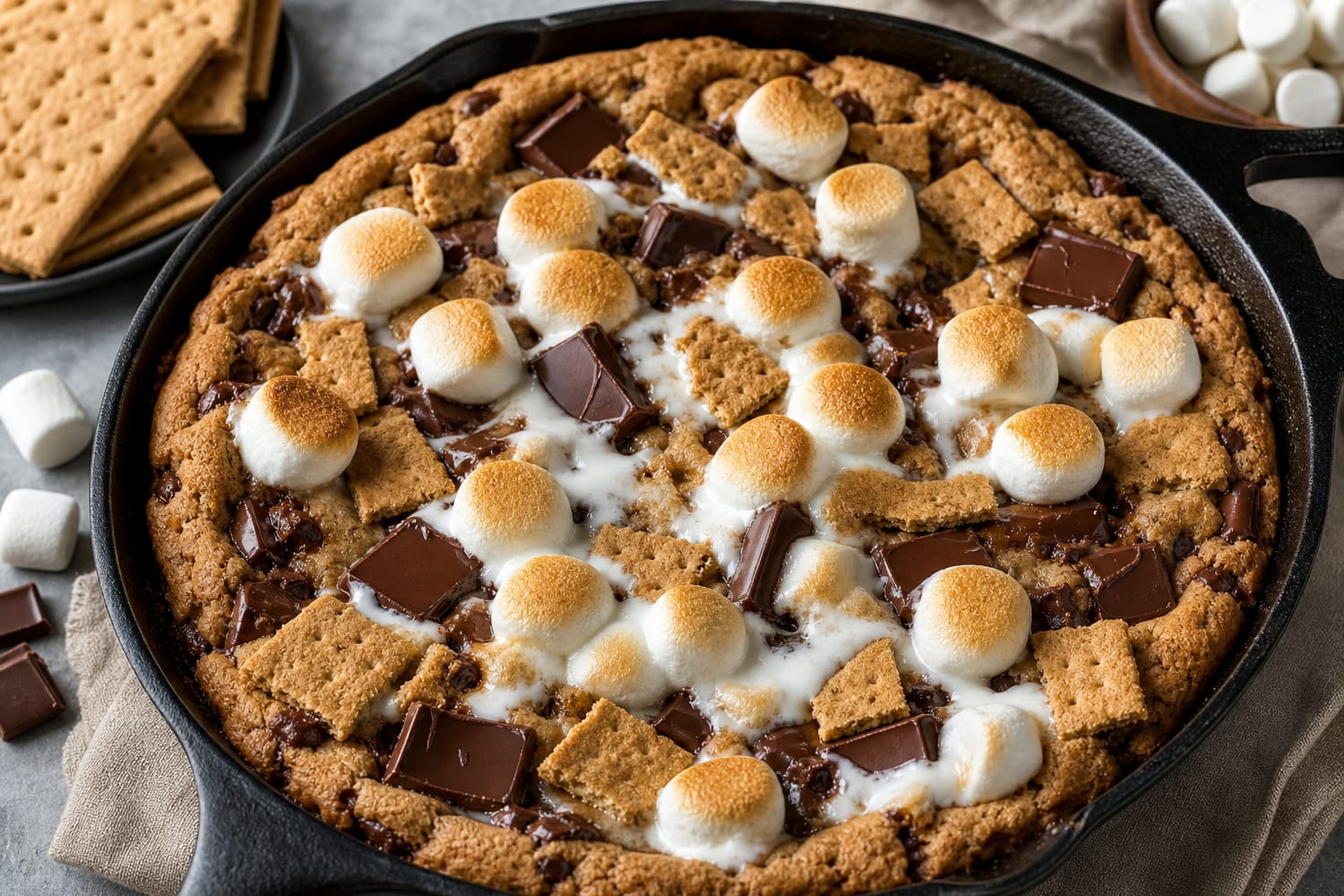
This decadent skillet cookie transforms classic campfire s’mores into a warm, shareable dessert. Brown butter, white miso, dark chocolate, and smoked sea salt temper the sweetness, while graham cracker crumbs create crisp edges and a chewy center. A crown of toasted marshmallows delivers the familiar fireside finish—no campfire required.

  • SERVES
    8 people
  • PREP TIME
    25 minutes
  • Cook TIME
    30 minutes
Ingredients
  • 10 tablespoons (142 g) unsalted butter, plus more for greasing
  • 1 cup (120 g) all-purpose flour
  • 3/4 cup (75 g) finely crushed graham crackers
  • 1/2 teaspoon baking soda
  • 1/4 teaspoon kosher salt
  • 1 teaspoon instant espresso powder
  • 3/4 cup (150 g) packed dark brown sugar
  • 1/4 cup (50 g) granulated sugar
  • 1 tablespoon white miso
  • 1 large egg
  • 1 large egg yolk
  • 2 teaspoons vanilla extract
  • 4 ounces dark chocolate, roughly chopped
  • 3 ounces milk chocolate, roughly chopped
  • 4 graham cracker sheets, broken into bite-size pieces
  • 2 cups miniature marshmallows
  • Flaky smoked sea salt, for finishing
  • Vanilla ice cream, for serving (optional)
Directions
  1. Prepare the oven and skillet. Preheat the oven to 350°F (175°C). Lightly butter a well-seasoned 10-inch cast-iron skillet.

  2. Brown the butter. Melt the butter in a light-colored saucepan over medium heat. Cook, swirling frequently, until it foams and the milk solids turn deep golden brown, about 4 to 6 minutes. Immediately transfer the butter and browned solids to a mixing bowl. Cool for 10 minutes.

  3. Combine the dry ingredients. Whisk together the flour, graham cracker crumbs, baking soda, kosher salt, and espresso powder in a separate bowl.

  4. Build the cookie dough. Whisk the brown sugar, granulated sugar, and miso into the cooled brown butter. Add the egg, egg yolk, and vanilla, whisking until smooth and glossy.

  5. Add the mix-ins. Fold the dry ingredients into the butter mixture just until no streaks of flour remain. Reserve a small handful of each chocolate, then fold the remaining chocolate and half the graham cracker pieces into the dough.

  6. Fill the skillet. Press the dough evenly into the prepared skillet. Scatter the reserved chocolate and remaining graham cracker pieces over the surface.

  7. Bake the cookie. Bake for 20 to 23 minutes, until the edges are golden and set but the center remains slightly soft.

  8. Add the marshmallows. Carefully remove the skillet and cover the cookie with the miniature marshmallows. Return it to the oven for 4 to 6 minutes, until the marshmallows are puffed and beginning to brown.

  9. Toast the topping. For a campfire-style finish, switch the oven to broil and toast for 30 to 60 seconds. Watch continuously because the marshmallows can darken quickly.

  10. Rest and serve. Sprinkle lightly with smoked sea salt and cool for 10 minutes. Serve warm directly from the skillet, preferably with scoops of vanilla ice cream.

S’mores are closely associated with American campfire cooking, although their precise origin is uncertain. An early published recipe for “some mores” appeared in a Girl Scout booklet during the 1920s, establishing the now-familiar combination of toasted marshmallow, chocolate, and graham crackers. The Smithsonian’s history of s’mores offers a fascinating look at how that sticky outdoor treat became an enduring dessert.

This version preserves those essential flavors but rebuilds them as a skillet cookie with several strategic upgrades. Graham cracker crumbs replace part of the flour, distributing their honeyed flavor throughout the dough rather than limiting it to a topping. Chopped dark and milk chocolate create contrasting pockets of bittersweet intensity and creamy sweetness.

The idea was to treat the familiar s’more as a flavor blueprint rather than a fixed formula—then generate a richer, more balanced dessert from its three defining ingredients.

Brown butter contributes toasted, hazelnut-like depth, while white miso supplies subtle savory complexity without making the cookie taste overtly salty. Espresso powder sharpens the chocolate, and a restrained sprinkle of smoked sea salt evokes the aroma of a dying campfire. Together, these additions balance the marshmallows and keep the finished dessert from becoming one-dimensional.

The cast-iron skillet is more than a dramatic serving vessel. Its hot surface encourages a deeply browned perimeter while protecting the soft, spoonable center that makes a skillet cookie so appealing. For additional technique, consult this cast-iron skillet cookie guide from King Arthur Baking, which also emphasizes resting the cookie before serving.

Add the marshmallows only near the end of baking so they remain distinct instead of dissolving into the dough. A brief pass beneath the broiler supplies the blistered finish of a properly toasted s’more, but close attention is essential. Serve the cookie warm for maximum contrast between crisp edges, melted chocolate, gooey marshmallows, and chewy graham-studded dough. For more inventive baking ideas, explore the collection of AI-inspired desserts from Iron Chef AI.