31

min
  • desserts

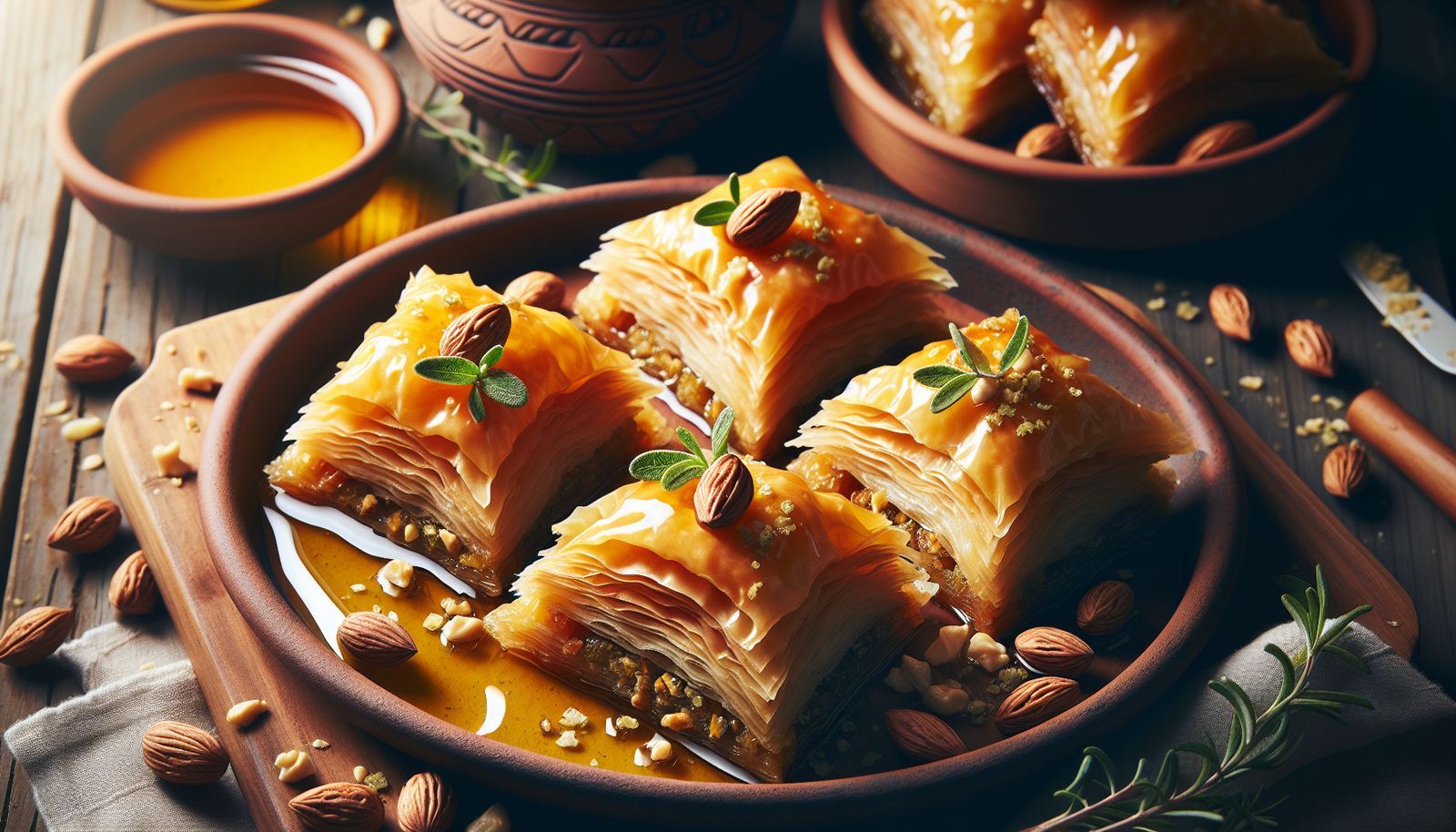
Backpropagation Baklava

Welcome to the delightful world of Backpropagation Baklava, where we take a classic Middle Eastern dessert and infuse it with a modern twist! Baklava, traditionally made with layers of phyllo pastry filled with nuts and sweetened with honey syrup, is a beloved treat that has been enjoyed for centuries. In this recipe, we introduce a unique flavor combination that elevates the baklava experience and pays homage to the intricate processes of backpropagation in machine learning. Just like the layers in our baklava, every component of this recipe builds upon the other to create a harmonious and delicious dessert.

  • SERVES
    12 people
  • PREP TIME
    30 minutes
  • Cook TIME
    1 hour
Ingredients
  • 1 package of phyllo dough (16 oz), thawed
  • 2 cups mixed nuts (walnuts, pistachios, almonds), finely chopped
  • 1 cup unsalted butter, melted
  • 1 teaspoon ground cinnamon
  • 1 cup honey
  • 1 cup granulated sugar
  • 1 cup water
  • 1 teaspoon vanilla extract
  • 1 tablespoon rose water (optional)
  • Zest of 1 orange
  • Pinch of salt
Directions
  1. Preheat your oven to 350°F (175°C).
  2. In a mixing bowl, combine the finely chopped mixed nuts, ground cinnamon, orange zest, and a pinch of salt. Set aside.
  3. Unroll the phyllo dough and cut it to fit your baking dish (approximately 9x13 inches). Cover the dough with a damp cloth to prevent it from drying out.
  4. Brush the bottom of the baking dish with melted butter. Layer 8 sheets of phyllo dough, brushing each sheet with melted butter before adding the next.
  5. Evenly spread a layer of the nut mixture over the phyllo. Repeat the process by layering 4 more sheets of phyllo, brushing each with butter, and then adding another layer of nuts. Continue until all nuts are used, finishing with 8 layers of phyllo on top, each brushed with butter.
  6. Using a sharp knife, score the baklava into diamond or square shapes before baking.
  7. Bake in the preheated oven for about 45-50 minutes, or until the top is golden and crisp.
  8. While the baklava is baking, prepare the syrup by combining honey, sugar, water, vanilla extract, and rose water in a saucepan. Bring to a boil, then reduce heat and simmer for about 10-15 minutes, or until slightly thickened. Remove from heat and let cool.
  9. Once the baklava is done baking, immediately pour the cooled syrup over the hot baklava, ensuring it seeps into the cuts.
  10. Allow the baklava to cool completely before serving, letting the syrup fully absorb into the layers.

Baklava's roots stretch deep into the culinary traditions of various Middle Eastern and Mediterranean cultures, where the use of nuts and honey has been celebrated for centuries. While baklava is traditionally indulgent and rich, our Backpropagation Baklava introduces a refreshing citrus note with orange zest and a hint of floral essence from rose water. This combination not only enhances the flavor but also adds a layer of complexity that is reminiscent of the layers in a neural network, where each node contributes to the final outcome.

"Great cooking, much like great programming, is about layering flavors and techniques. Each step builds upon the last, creating something greater than the sum of its parts."

This recipe is inspired by the meticulous nature of backpropagation in machine learning, where each layer of the network refines the output. Similarly, each layer of phyllo and nut mixture in our baklava contributes to a beautifully balanced dessert. The addition of orange zest and rose water sets this baklava apart from the traditional versions, providing a refreshing twist that will surprise and delight your guests.

So, whether you're celebrating a special occasion or simply indulging in a sweet treat, this Backpropagation Baklava is a delicious way to experience a classic dessert with a modern flair. Enjoy each layer and savor the journey of flavors!